The hybrid property: managing private rooms and dorm beds in one system
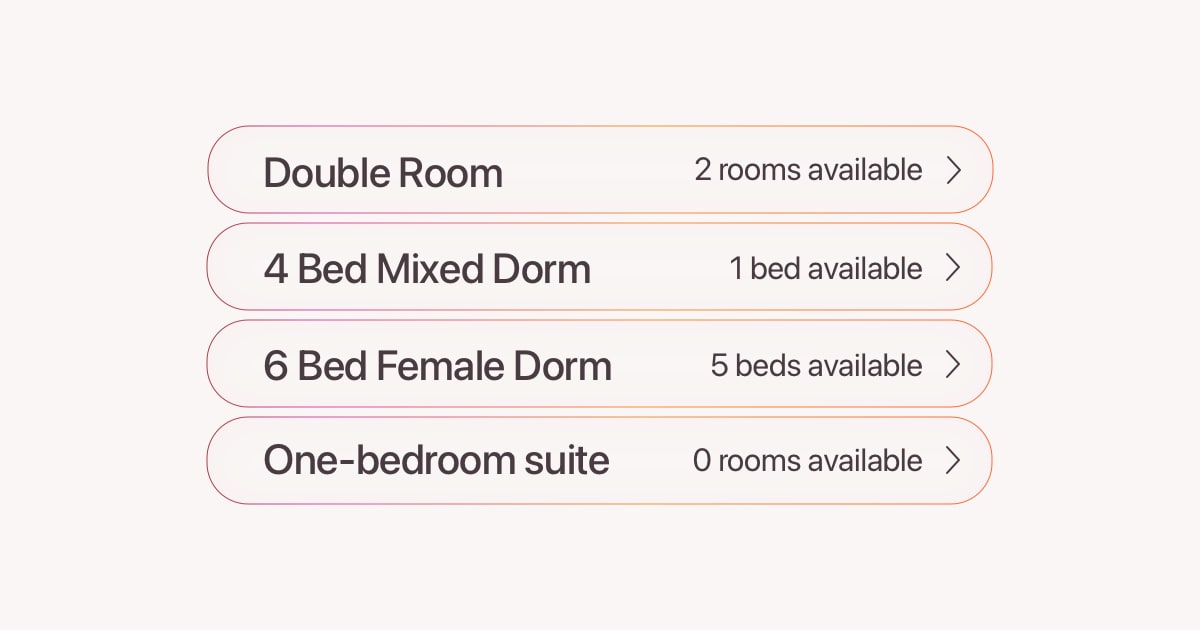
You own a 12-bed dorm, four private rooms, and a shared kitchen that guests from both sides of the property use every morning. Your operation is neither a hotel nor a traditional backpacker hostel. It is something in between, and that is exactly where the problems begin.
The software industry built hotel PMS products for hotels. It built hostel management tools for hostels. Very few systems were designed with hybrid properties in mind, yet hybrid is increasingly the dominant format for independent hospitality. Boutique hostels adding private rooms to capture a higher-spending traveler. Guesthouses adding shared dorms to stay competitive on price. Family-run properties offering "the best of both worlds" because their guests actually want that.
If you are running a hybrid property today, this post is about the specific operational logic your software needs to handle, why most systems get it wrong, and what the right approach actually looks like.
Two inventory types, one calendar
The fundamental challenge of a hybrid property is not design or marketing. It is inventory logic.
A private room works like a standard hotel room: one booking occupies the entire unit. One guest (or a couple, or a family) pays for the room, and that room is unavailable to everyone else until they check out.
A dorm bed works differently. A six-bed dorm room can hold up to six separate bookings simultaneously, each with different guests, different check-in dates, different lengths of stay, and potentially different prices depending on when each bed was booked. The unit is not the room. The unit is the bed.
When you add both types to a single property and try to manage them through a system designed only for one, things fall apart quickly.
A hotel PMS will try to treat your six-bed dorm as a "room type" with six units. On paper that looks correct, but it misses everything important: bed assignment, gender preferences, occupancy rules, the fact that a guest in bed 3 checking out on Thursday does not free up bed 4, which is occupied until Saturday. The system sees "room available" when individual beds within it may not be.
A basic hostel tool solves the bed-level problem but then struggles with private rooms, often treating them as awkward edge cases rather than first-class inventory types.
Why "one size fits all" software never fits hybrid properties
Enterprise hotel software is built around assumptions that do not hold for hybrid properties. Rate structures are room-based. Availability is calculated by room count. Housekeeping is assigned by room. Reports aggregate by room type.
None of these assumptions work when half your inventory is measured in beds.
The result is manual workarounds. Property managers build spreadsheets alongside their PMS to track actual bed availability. They maintain separate booking flows for dorms and private rooms, sometimes on entirely different platforms, and then manually reconcile them. They manage the channel manager for private rooms and handle dorm bookings separately, all while trying to prevent double bookings across two systems that do not talk to each other.
This is not a corner case. It is how a large share of hybrid properties operate today, because the software has not caught up with how the market has evolved.
The problem is not that property managers are unsophisticated. It is that the tools they have available were not designed for their actual use case.
The rise of the hybrid traveler (and why it matters for your software)
The growth of hybrid properties is not accidental. It tracks the evolution of a particular type of traveler: someone who is comfortable in shared spaces, values the social atmosphere of a hostel, but also sometimes wants a private room, a proper bed, and a door that locks.
Digital nomads are the clearest example. They may book a dorm bed for a one-week stay when budget is tight, but upgrade to a private room when they have a client call or simply need to sleep properly before a long travel day. The same person, the same property, different inventory types depending on the week.
Long-stay guests have similar patterns. A traveler staying 10 or 14 nights in your property is far more likely to move between room types over the course of their stay than someone on a 2-night city break. Managing that kind of flexible, extended occupancy requires a system that understands both inventory types equally well.
What a hybrid-ready system actually needs to handle
If you are evaluating PMS software for a hybrid property, here is the specific functionality that separates tools built for your use case from tools that will leave you building workarounds.
True bed-level inventory. The system needs to track individual beds as bookable units, not just rooms. This means each bed has its own availability, its own assignment logic, and its own occupancy record. When a guest books bed 2 in dorm 4, that bed is marked unavailable. The other five beds in the same room remain independently available.
Room-level and bed-level pricing in the same system. Your private rooms and your dorms will be priced differently and may use different pricing logic (seasonal rates, length-of-stay discounts, last-minute pricing). A hybrid property needs both pricing models available without you having to switch between platforms.
Gender and preference filtering. Many hostels offer female-only dorms, mixed dorms, and private rooms. Guests booking a bed need to be assigned to the correct dorm type without manual intervention. The system should handle this automatically at the point of booking.
Unified calendar view. You need a single view of your entire property's occupancy, whether you are looking at private rooms or individual beds within shared dorms. Switching between two separate dashboards to understand one property's availability is a design failure.
Channel management that understands both inventory types. When you list your property on Booking.com or Hostelworld, your channel manager needs to sync availability correctly for both room types. This is harder than it sounds: most OTAs handle hotel rooms natively but require specific configurations for bed-level hostel inventory. A good channel manager handles this translation without manual adjustments on your part.
Understanding iCal vs. API connections matters here, because bed-level inventory synced via iCal is particularly error-prone.
Housekeeping and turnover logic. A private room turnover and a dorm bed turnover are different tasks. The system should be able to distinguish between them, assign them appropriately, and flag when a partial dorm turnover is needed (one guest checks out, others stay on).
The reporting problem most hybrid operators overlook
Revenue reporting for hybrid properties is genuinely complex, and most PMS tools make it worse by applying hotel-standard metrics uniformly across inventory types.
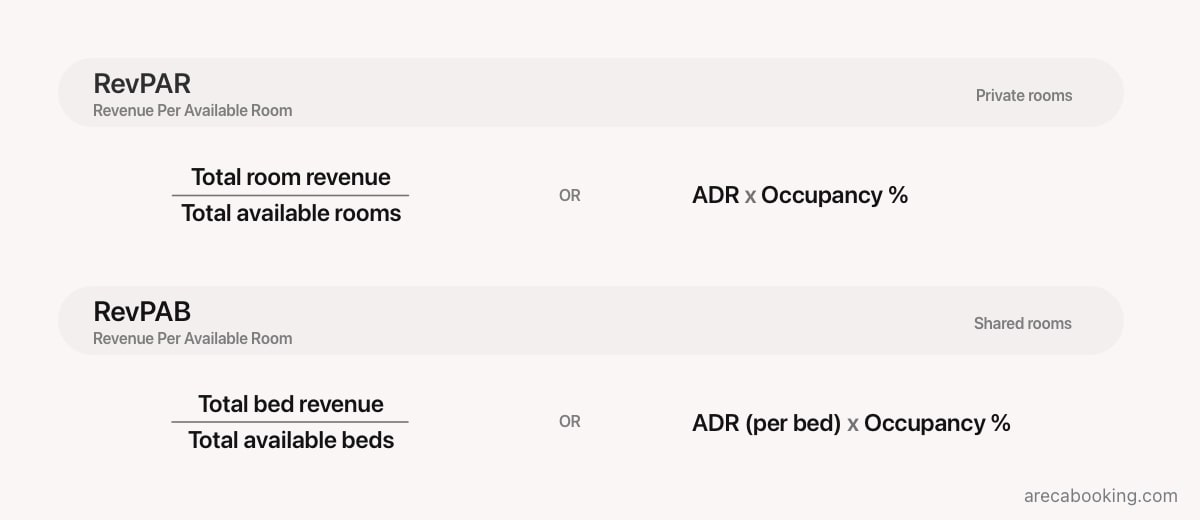
RevPAR (revenue per available room) is a useful metric for your private rooms. It tells you almost nothing useful about your dorm inventory, where the relevant unit is a bed, not a room. Applying RevPAR to a six-bed dorm tells you the room earned €X per night. What you actually want to know is the average revenue per available bed per night, how many beds were occupied simultaneously, and what the revenue gap looks like when three beds in a six-bed dorm sit empty on a Saturday.
A hybrid property needs reporting that can segment by inventory type. Private rooms and dorms are different products with different cost structures, different occupancy patterns, and different revenue optimization strategies. Treating them as one thing in your reports makes it impossible to make good decisions about either.
Where Areca fits
Areca was built specifically to handle this operational complexity. The system treats private rooms and dorm beds as genuinely different inventory types that coexist in a single property, with a unified calendar, bed-level availability tracking, and pricing logic that works correctly for both.
For hybrid properties, the pricing structure is also worth noting: the base plan at €29/month covers up to 10 private rooms or 40 units, and for hostel inventory specifically, four shared dorm beds count as one unit. This means a property with a mix of private rooms and a couple of dorms is unlikely to need the higher tier, even at a meaningful total bed count.
If you want to go deeper into how modern hostel operations work at the process level, the companion post to this one covers the practical side: Modern hostel management: how to run a profitable, automated beds and rooms property.
Check out Areca pricing for more details on how our plans work.
The right frame for evaluating any PMS
When you are looking at property management software for a hybrid property, the single most useful test is this: can the system tell you, right now, exactly which individual beds in your dorms are available for each night over the next 30 days, while also showing you which private rooms are free?
If the answer requires opening a spreadsheet, checking a second platform, or calling it "a limitation of the system", you have found your problem. The software should do this natively, without workarounds.
Hybrid properties are not edge cases anymore. They are a significant and growing segment of independent hospitality, and the tools available to run them have been slow to catch up. Choosing software that was built for your actual operation, rather than adapted from a model designed for someone else's, is one of the most consequential decisions you will make.
Areca is a property management system and booking engine built for independent properties, including hybrid hostels managing both private rooms and dorm beds. Start at €29/month. Questions? Write to [email protected].